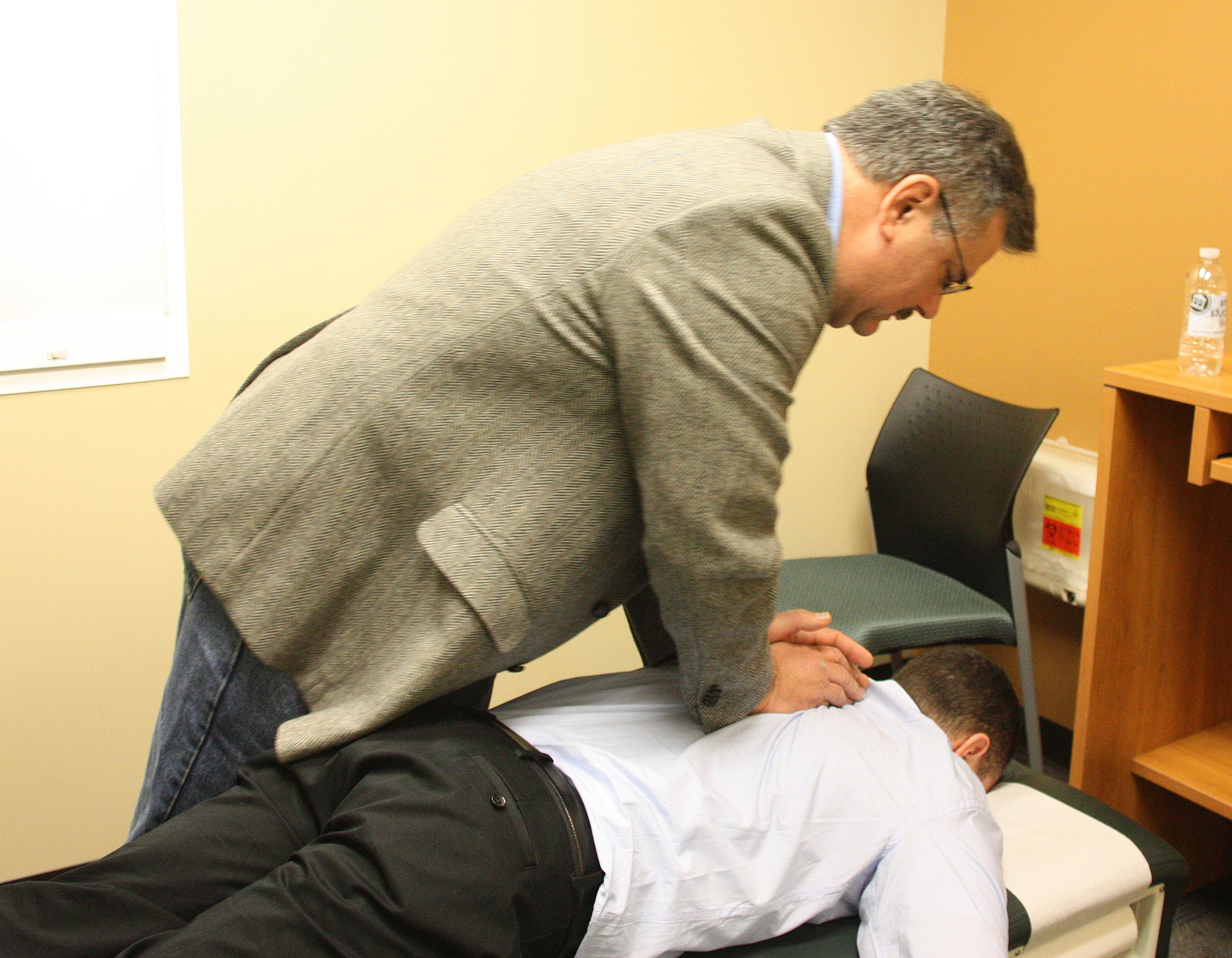
There’s nothing more satisfying that hearing the popping sounds that travel up and down your spine when you crack your back. But is cracking your own back really safe? Although a crack here and there probably won’t do you any harm, habitually cracking your own back may lead to more serious problems. (more…)
There’s nothing more satisfying that hearing the popping sounds that travel up and down your spine when you crack your back. But is cracking your own back really safe? Although a crack here and there probably won’t do you any harm, habitually cracking your own back may lead to more serious problems.
What Really Happens When I Crack My Back?
Much like cracking your knuckles, cracking your back may provide a temporary feeling of relief or relaxation. But what really happens when you crack your back? Each of your joints contains fluid that lubricates the joints and prevents painful movement. Joints also contain gases such as carbon dioxide and nitrogen. When you place the fluid-filled joints under pressure by twisting your spine, the gas exits abruptly and makes a cracking sound. The “crack” or “pop” is not a sign of pressure but does indicate that you’ve released some of the gas in your joints.
Potential Dangers of Cracking Your Own Back
Some cracks in your back or neck occur naturally, but habitually cracking your own back places additional stress on your joints. Like other structures in the body, joints consist of soft tissue that can be damaged when placed under excessive pressure. Additionally, the release of gases during back cracking can cause your joints to relax. This makes them more susceptible to injury, such as a herniated disk. Thus, it is never recommended to exercise or perform strenuous physical activity immediately after cracking your back.
Alternatives to Cracking Your Back
For some people dealing with chronic back pain, cracking the back may be a way to try to get some relief. However, there are better ways of dealing with chronic pain. To begin, try stretching your back. Flex forward, stretching your back muscles, and hold for at least 30 seconds. Then, extend backwards and hold before gently bending from side to side. Avoid bouncing motions, which can exacerbate back problems or pain.
Of course, the best way to get the relief associated with back cracking is to see a spine care specialist who can alleviate your back tension. Spinal manipulation is a medical technique that can be highly effective when performed by a professional. For more information, contact Southeast Orthopedic Specialists today to discuss your situation and find the back relief you crave.
Image Source: Wikimedia Commons
Why You Should Beware of ‘Text Neck’
Modern technological advancements have done wonders to improve productivity and efficiency in the past few decades, but new technologies are not without their drawbacks. We’ve all heard of people who developed carpal tunnel syndrome after too much typing, but there is a new scourge affecting smartphone users: “text neck.” (more…)
Why Are Women More at Risk of ACL Injury?
Although women are often said to have better flexibility than men, they are much more likely to experience knee ligament injuries, according to the American Association of Orthopaedic Surgeons. Female athletes who participate in sports involving pivoting or jumping, such as basketball, volleyball and soccer, are two to 10 times more likely to injure a knee ligament than their male counterparts. This has significant implications for training, recovery from injury and lifelong joint health. (more…)
Posture Tips for a Healthy Spine
Back pain is the number one source of disability worldwide, according to figures from the 2010 Global Burden of Disease Report. With 31 million Americans reporting that they experience back pain, it is important to address this widespread health problem. Although spinal problems can arise due to many causes, poor posture is a leading contributor to back pain and spinal health problems. (more…)
How to Reduce Your Chances of Injury From Exercise
There is no doubt that regular exercise is a big part of staying healthy. Unfortunately, despite your best efforts, you may find yourself experiencing mild injuries while working out. Exercise injuries can happen to anyone, regardless of their fitness level, experience or ability. Though you may not be able to completely eliminate your chances of getting hurt during exercise, there are some steps you can take to minimize your risk of injury. (more…)
5 Questions You Should Ask Before Any Orthopedic Surgery
After your doctor tells you surgery is required, it can be both frightening and intimidating. There are some things you can do to ease some of the stress involved prior to having orthopedic surgery. By asking your surgeon these five questions, you should better understand what to expect and hopefully ease your anxieties as well as become better informed before undergoing an operation. (more…)
Tips for a Fast Recovery After Your Hip Replacement
Hip replacement surgery helps ease pain and restores flexibility. This should make it easier for you to do normal activities, but keep in mind that you might not be able to do them right away. A full recovery from this type of surgery typically takes anywhere from two to six months. You can help the recovery process by doing the following. (more…)
Easing Back Into Exercise After Your Knee Surgery
One of the more common types of orthopedic surgery is knee surgery. People put a lot of stress on their knees by walking, jogging and by partaking in many other common kinds of exercise and activity. Fortunately, partly because of the frequency of these injuries and surgeries, a great deal is known about the best ways to ease back into exercise and back into an active lifestyle. (more…)
Symptoms and Treatment of Tennis Elbow
What Is Tennis Elbow?
Also commonly referred to as lateral epicondylitis by the medical community, tennis elbow is a condition that involves the outer part of a person’s elbow becoming sore and experiencing a tender sensation. The underlying medical issue involves inflammation of the tendons that bring together the muscles in a person’s forearm just on the outside of the elbow. Tennis elbow can be either acute or chronic in nature, depending on the situation. (more…)
Stress Fractures Explained: Prevention, Causes and Treatment
A fracture is a mini-break or hairline crack in your bone, and even though it doesn’t result in a true break or splinter, it can still cause pain and disruption of motor function and normal activity in the affected area. Stress fractures usually result in pain or tenderness around the affected area. (more…)